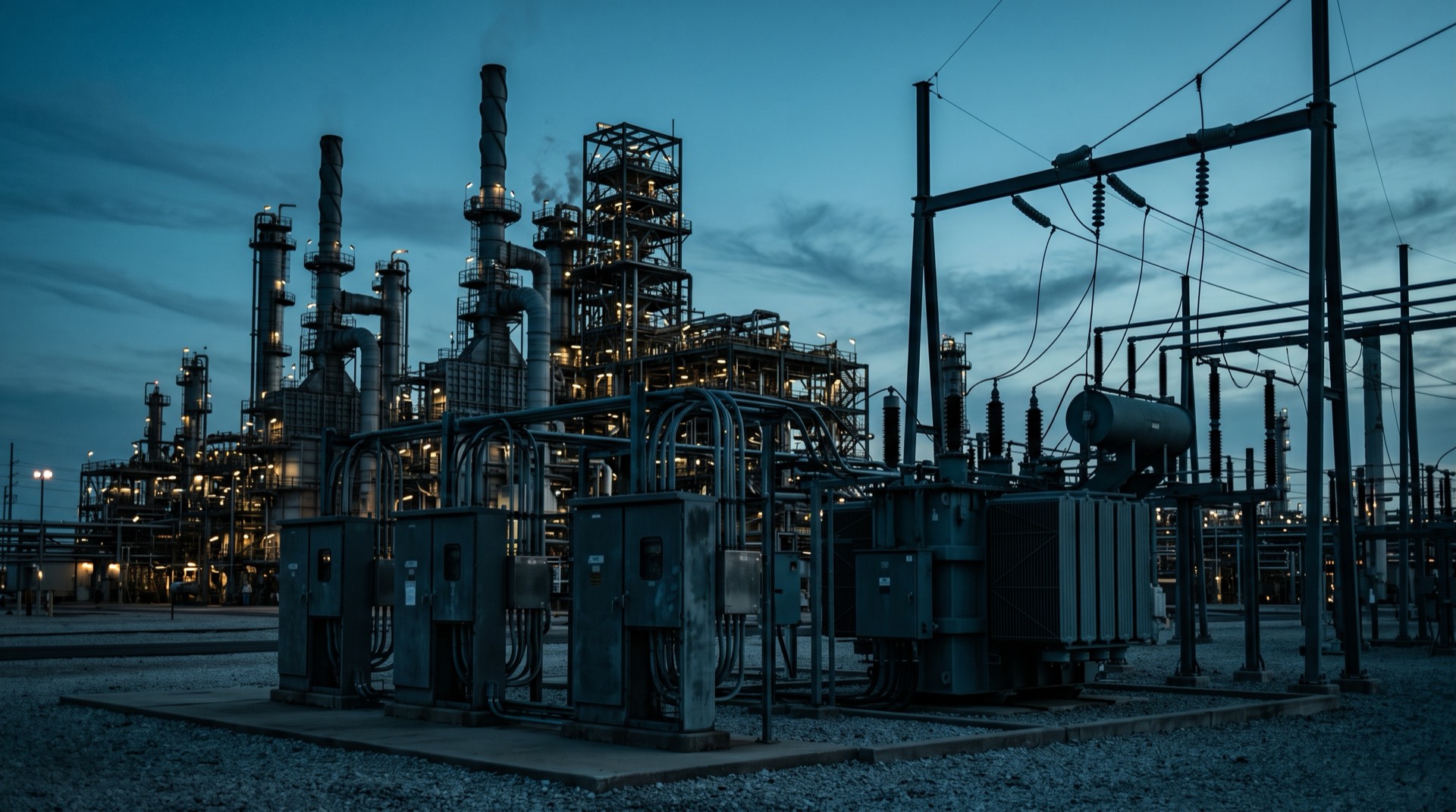
Why an industrial UPS is not a datacenter UPS
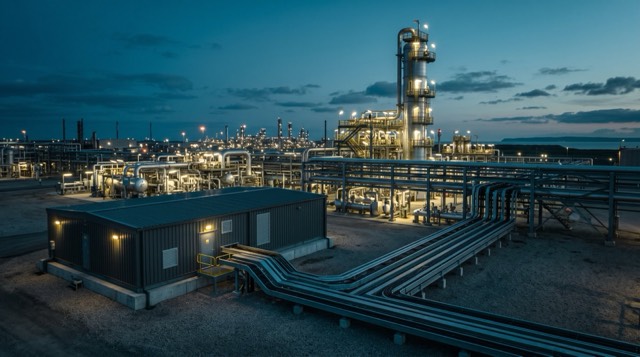
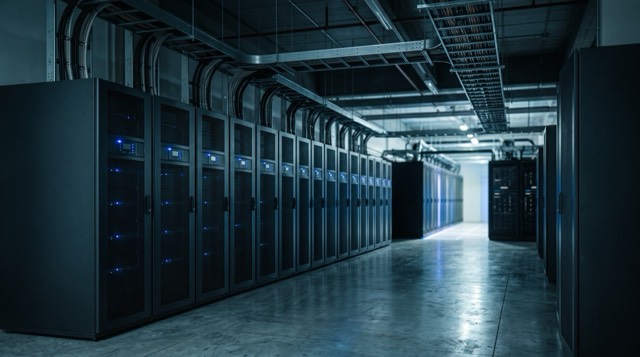
Start with the two rooms. A datacenter hall is temperature-controlled, filtered and clean, its load a large population of near-identical electronic power supplies. A plant's electrical room may be none of those things, and its load is a handful of very different items, each of which matters on its own.
So the specification controls different things. In a datacenter: efficiency, footprint, how finely capacity can be added later. In a plant: ambient conditions, isolation, fault behaviour, and whether the unit is still repairable once the people who commissioned it have retired. The industrial AC UPS range publishes those terms directly — 10-500kVA, a +25 years design life, -10 to 50°C, and IP20 as standard with up to IP55 available.
- The environment is an input, not a footnote
- Heat, dust, vibration, humidity and altitude decide the enclosure, the cooling and how much of the nameplate you get.
- The load is a mixture of AC and DC
- Trip and close coils, relays and DCS marshalling want DC; emergency lighting, valves and turbine auxiliaries want AC.
- The electrical context is rougher than the load
- Long inter-building runs, mixed earthing, motors that move the voltage on every start, and standby generation to tolerate.
The plant environment sets the specification before the load does
Temperature works in both directions. The published operating range for the LEON-A AC UPS, the ESD DC system and the E-VR inverter is the same, -10 to 50°C, with storage from -25 to 70°C at 0 to 95% relative humidity (non-condensing). The low end matters too: an unheated switchroom that cools overnight and warms at sunrise makes condensation, which is why a cabinet heater sits on the ESD and E-VR option lists.
Altitude is the derating everyone forgets. All three families are rated to 1000m from MSL, then derate 1% for each additional 100m — a sizing input.
Dust, vibration and corrosive atmospheres are answered by the enclosure and the room together. Standard build is IP20 on all three; the AC UPS and inverter go up to IP55, the DC charger up to IP54. Cooling is fan-forced, and on the LEON-A ventilation failure is covered by dual fans and a fan-failure alarm, because a blinded filter is routine in a dusty plant. The E-VR datasheet states the series is built to withstand high vibration and harsh electrical conditions.
The LEON-A manual still asks for 20 cm behind the unit and warns against a place that can cause dust and corrosion. An IP55 cabinet in the wrong room is still in the wrong room.
Industrial power protection usually means two systems, not one
Write out the loads a plant has to hold up and the answer stops being a single UPS.
DC side: switchgear tripping and closing coils, protection relays and trip circuits, breaker control, DCS and PLC marshalling, instrumentation loops. These are DC by convention, so a plant DC system is specified in volts and amps, not kVA. The industrial DC UPS and battery charger range covers 24VDC to 600VDC at 10A to 2000A three phase, holding regulation to < 0,5% with ripple of <1% three phase and <4% single phase; the standard output list includes 110VDC and 125VDC, the control voltages switchboards were built around. And a battery on boost charge sits above the load's nominal voltage, so the load output can go through a diode dropper or a DC/DC converter, keeping relays inside tolerance while the bank recharges.
AC side: emergency lighting, motorised valves and actuators, turbine auxiliaries, small drives and operator workstations. With no DC system, or a large AC load, an AC UPS answers directly; where a plant has a DC bank, an inverter lets AC auxiliaries ride the same battery as the protection system. The industrial inverter range takes 24VDC to 600VDC and produces 110VAC to 600VAC defined on order, up to 500kVA three phase. Its overload profile — 125% for 10 mins, 150% for 1 min, 200% for 1 sec — is shaped for a valve actuator's inrush, not a server's flat draw. The mistake is not choosing wrongly; it is choosing before the load schedule exists.
The electrical context: long cable runs, motor starting and standby generation
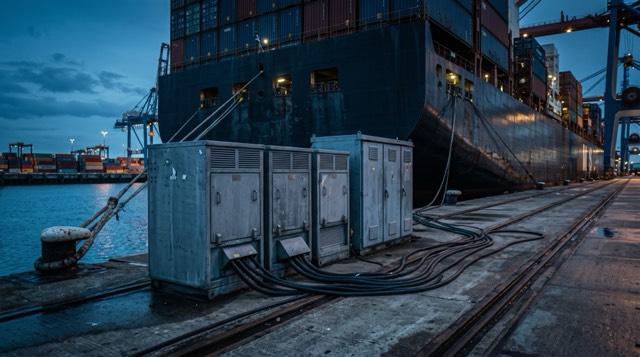
Long runs between buildings lengthen the earth path and make a fault harder to find. What helps is a separately derived output, plus instrumentation saying which side of the isolation the fault is on: the LEON-A datasheet lists DC Earth Fault among its protections and its manual reports both DC and AC earth-fault alarms. The same manual rates the neutral cable at 1.4 times rated current, because single-phase non-linear loads put triplen harmonic current into it.
Large motor starts move the voltage at the board, and the UPS must treat that as normal rather than as a reason to go to battery. The standard mains window on the LEON-A is ±10%, with ±15% and ±20% optional. On the output it arrives as a step load: recovery is 25ms (to within 1%), with overload of 110% continuous, 110-125% for 10 mins and 125-150% for 1 min.
On transfer to a generator, frequency wanders while the set finds its governor. The LEON-A accepts 50Hz, 60Hz or 400Hz (±10%) and its datasheet describes VFI — Voltage and Frequency Independent — operation, so the load sees the inverter rather than the set. The plant detail is the bypass: mains and bypass inputs can be separated so the bypass is fed from a separate source.
Harmonics travel the other way: input THDu on the LEON-A is 30% as standard, 12% with the 12-pulse rectifier and 5% with an input filter.
Why galvanic isolation keeps recurring in industrial UPS design
The same component appears in all three industrial families: a galvanic isolation transformer on the LEON-A output as standard, a standard input isolation transformer on the ESD charger, and a standard output isolation transformer on the E-VR inverter, in copper or aluminium. Commercial UPS design has engineered the transformer out; industrial design keeps engineering it back in.
The reason is not nostalgia. A transformer gives a separately derived source, so load-side earthing is chosen for the load rather than inherited from a supply two buildings away. It breaks the metallic path that carries common-mode noise and DC-side earth faults into sensitive equipment, and provides the impedance that limits and clears fault current. And it lets a unit sit between two systems whose voltages, phase counts and earthing philosophies do not match. ESD isolation is published at 1500VAC input/output to chassis, optionally 2000VAC or 3000VAC, at 200MΩ isolation resistance.
The trade is weight, footprint and loss: the E-VR is quoted at up to 93% efficiency on the three phase model, not a modular datacenter figure. In a plant the failure it prevents usually costs more than the losses it adds — but decide that deliberately. Galvanic isolation in UPS systems works through the mechanism.
Decades, not refresh cycles: what a long design life does to the decision
A +25 years design life changes the arithmetic of the purchase.
The battery becomes a separate decision. Across the industrial battery range, VRLA is quoted at 10-12 years of design life, OPzV at 15 years, OPzS at more than 15 years and Ni-Cd at more than 20 years — so inside one UPS's life the bank is replaced at least once and probably twice. The charger has to suit the chemistry still available then: the LEON-A charges the lead-acid family at 10-15% of battery capacity and Ni-Cd at 20%, on an adjustable 0-20 hour boost timer with temperature-compensated charge.
Maintainability is a specification item. Full front access means a unit can be worked on in a room with a wall behind it; a maintenance bypass means the load stays fed while that happens. The LEON-A parallels up to 4 units as dual redundant or for capacity, the E-VR up to 2 units.
Integration has to stay readable in fifteen years. ModBus RTU RS232 with four dry contacts is the standard build, with RS485, ModBus TCP/IP, SNMP and IEC61850 optional and dry contacts expandable to sixteen.
The datasheets name what each product was designed against: EN 62040-1 and EN 62040-2 on the LEON-A and E-VR, IEC60146-2, IEC60204-1 and IEC61204-2 on the ESD. That describes the design, not the standards your own project must satisfy.
How to specify an industrial UPS a plant can actually maintain
A specification that produces comparable offers describes the site and the loads before it describes the product. In that order.
- State the ambient case, not the design case: highest and lowest room temperature, dust, humidity and site altitude — output derates 1% for each additional 100m above 1000m from MSL.
- Set ingress protection from the room, not the catalogue: IP20 is standard, up to IP55 on the AC UPS and inverter and IP54 on the DC charger, plus a cabinet heater for an unheated building.
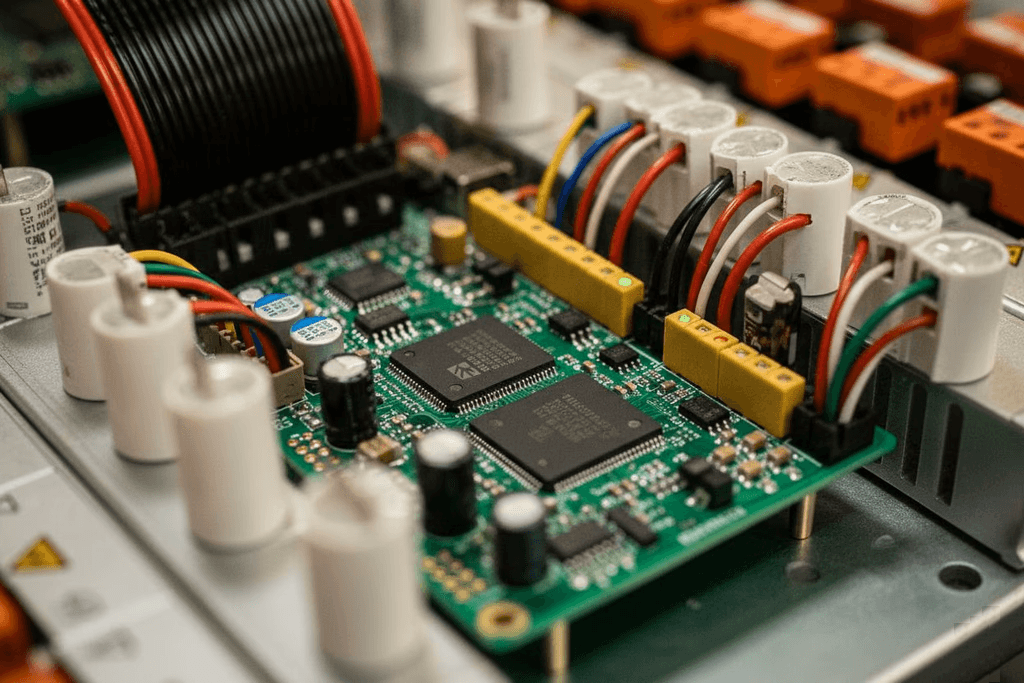
- Raise board-level protective coating and terminal plating explicitly for a corrosive atmosphere; that is a build detail to agree, not a standard datasheet line.
- Schedule the DC loads and the AC loads separately, each with its voltage, before naming a topology.
- Describe how the supply behaves: the voltage window it swings through, whether a generator will feed it, and whether the bypass may come from a separate source.
- Specify the maintenance case — front access, maintenance bypass and clearance; the LEON-A manual asks for 20 cm behind the unit.
- What to send a supplier
- A load schedule split into AC and DC, a description of the room, the supply's real behaviour, and your accepted risks. That produces a specification and comparable offers; a kVA figure and a delivery date produce a quotation.